We’re helping shrink the education funding gap by donating $213 million in SmartControllers™ to schools all across America. You can help by spreading the message.
Overwatering is one of the most common—and most damaging—landscape mistakes. For property managers and facility directors, the signs often go unnoticed until plant health declines, water bills spike, and landscapes start requiring costly replacements.
Understanding what overwatered plants look like is a critical skill. Not only does it protect your landscape investment, but it also supports better sustainability practices—something Smart Rain empowers organizations to achieve through smart irrigation technology.
This guide breaks down the visual cues that signal too much water, along with why they happen and what you can do about them.
Why Overwatering Is Such a Problem
While underwatering gets most of the attention, overwatering is often more harmful. Constant moisture around plant roots creates:
Reduced oxygen in the soil
Greater susceptibility to fungal diseases
Weak, shallow roots
Increased nutrient leaching
Stress that mimics drought (even though water is abundant)
The result? Plants that look unhealthy and require more maintenance—and landscapes that run less efficiently.
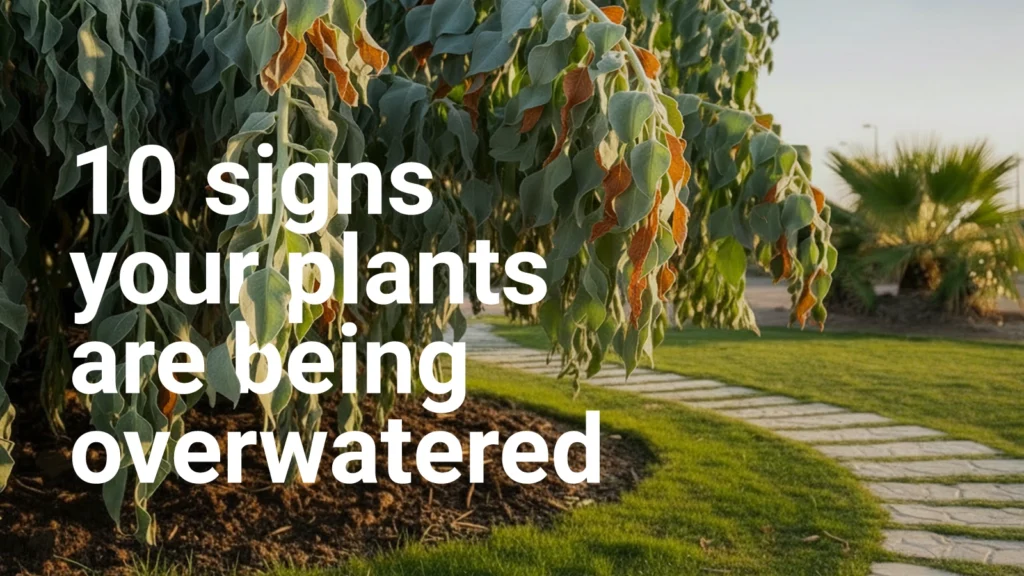
10 Clear Visual Signs Your Plants Are Being Overwatered
1. Yellowing Leaves (Especially Lower Leaves)
If leaves turn uniform yellow, especially from the bottom up, the plant may be drowning in water. Why it happens: Too much water prevents roots from absorbing essential nutrients. Easy check: Yellow leaves that feel soft or mushy, not dry.
2. Wilting—Even Though the Soil Is Wet
This is one of the most confusing signs. Overwatered plants can wilt exactly like underwatered ones. Why it happens: Saturated roots suffocate and stop functioning, so the plant droops.
3. Soft, Mushy, or Translucent Leaves
Plants experiencing excess water often develop leaves that appear watersoaked. Common on: Groundcovers, annual flowers, and tropical plants used in décor beds.
4. Brown Leaf Tips or Edges
Many managers assume browning = not enough water. However, overwatering can create root rot, which prevents water uptake, leading to crispy brown tips.
5. Leaf Drop or Premature Defoliation
If plants are shedding leaves outside normal seasonal patterns, it can indicate stress from excessive moisture.
6. Fungal Growth on Soil Surface
White fuzz, mushrooms, or algae mats growing across mulch or soil signal moisture staying too long. This is a red flag that irrigation schedules need adjusting.
7. Rotting or Foul Smelling Roots (When Inspected)
A single inspection can reveal the problem across the landscape.
8. Swollen, Blistered, or Oozing Leaves (Edema)
When plants absorb more water than they can use, cells burst, creating:
Blisters
Water-soaked bumps
Corky patches
This is especially common in shrubs and ornamentals.
9. Soil That Is Consistently Soggy
Even if plants look “fine,” persistently wet soil is a warning sign. You may also notice:
Standing water
Soil that sticks to shoes
Mulch that never dries
10. Increased Pest Problems
Overwatered areas attract insects such as:
Fungus gnats
Slugs and snails
Rootfeeding larvae
Mosquitoes (if water pools)
Pest pressure is often a side effect, not the root cause.
Common Landscape Areas Where Overwatering Happens Most
Property managers often see overwatering in zones where irrigation is set and forget or where runoff patterns aren’t monitored:
Turf areas with overlapping spray zones
Shaded plant beds that dry slowly
Newly installed landscapes
Planters with poor drainage
Sloped areas where water collects at the bottom
Understanding these hotspots allows for proactive monitoring.
How Smart Irrigation Prevents Overwatering
Smart Rain’s technology is designed specifically to stop these problems before they start by:
Monitoring real-time soil moisture
Adjusting watering automatically based on weather and plant needs
Detecting leaks and overspray
Avoiding unnecessary irrigation cycles
Producing data that property managers can act on instantly
This means less guesswork, healthier landscapes, and lower water bills.
How Smart Irrigation Prevents Overwatering
Here are quick steps to take if you suspect overwatering:
Inspect visibly stressed plants first
Look for the signs listed above—yellowing, wilting, wet soil.
Check irrigation run times
Overlapping zones or outdated schedules are common culprits.
Test soil moisture
Even a simple probe can reveal whether water is building up.
Reduce watering and monitor changes
Most plants bounce back when excess water is removed.
Consider upgrading to smart irrigation control
This is the long-term solution for eliminating overwatering altogether.
Final Thoughts
Overwatering is silent, subtle, and surprisingly destructive—but it’s also preventable. By recognizing the visual symptoms early, property managers and facility directors can protect their landscapes, reduce plant loss, and significantly cut water waste.
Smart Rain provides the tools and insights to keep your property’s landscape healthy while helping you save money and conserve one of our most precious resources.